
Your nonprofit does meaningful work, and the people who believe in your mission want to support it. Online donations make that possible around the clock, from anywhere in the world. The challenge is knowing where to start.
WordPress makes it straightforward to accept donations on WordPress without hiring a developer or spending thousands on custom software. This guide walks you through the entire process, from choosing a payment processor to launching a donation page that converts visitors into supporters. If you’re building your nonprofit website from scratch, this is the step that turns it into a fundraising tool.
What You Need Before Setting Up Donations
Before installing anything, get a few essentials in order. These save you time and prevent headaches later.
- A WordPress website on your own hosting – You need self-hosted WordPress (WordPress.org), not WordPress.com’s free plan. If you don’t have a site yet, our guide on building a nonprofit website for under $10/month covers the setup.
- An SSL certificate – This encrypts donor data during checkout. Most hosting providers include a free SSL certificate. Look for the padlock icon in your browser’s address bar. Without it, payment processors won’t work, and donors won’t trust your site.
- A payment processor account – You’ll need either a Stripe account, a PayPal account, or both. Stripe is the most flexible option. PayPal is familiar to donors. Many nonprofits offer both.
- Your nonprofit’s tax information – Have your EIN (Employer Identification Number) ready if you’re a registered 501(c)(3). Donors expect proper tax receipts.
Once you have these, the rest takes about an hour.
Step 1: Choose a WordPress Donation Plugin
WordPress doesn’t include donation functionality out of the box. A donation plugin adds the forms, payment processing, and donor management your site needs.
Here are the three best options for most nonprofits:
GiveWP (Best for Most Nonprofits)
GiveWP is the most popular WordPress donation plugin, and for good reason. The free version handles unlimited donation forms, goal tracking, and donor management. It supports Stripe and PayPal out of the box. Add-ons unlock recurring donations, fee recovery, and advanced reporting.
Choose GiveWP if you want a complete fundraising platform that grows with your organization.
Charitable (Best for Campaign-Based Fundraising)
Charitable organizes donations around campaigns. Each campaign has its own goal, page, and tracking. The peer-to-peer fundraising extension lets supporters create their own pages and raise money on your behalf. Great for events like walkathons or annual drives.
Choose Charitable if you run multiple fundraising campaigns throughout the year.
PayPal Donations (Best for Simple Setup)
If you already have PayPal and just need a donate button, this plugin gets you up and running in minutes. No complicated configuration. It adds a button to any page, post, or sidebar widget. Donors complete their payment on PayPal’s trusted checkout page.
Choose PayPal Donations if you need something working today with minimal setup.
For a detailed comparison of all eight options, including Donorbox, WP Simple Pay, and WooCommerce Donations, read our full guide on the top WordPress donation plugins.
Step 2: Install and Configure Your Plugin
We’ll use GiveWP for this walkthrough since it’s the most common choice. The process is similar for other plugins.
Install GiveWP
- Go to Plugins > Add New in your WordPress dashboard
- Search for “GiveWP”
- Click Install Now, then Activate
- GiveWP adds a new “Donations” menu to your dashboard sidebar
Connect Your Payment Processor
Go to Donations > Settings > Payment Gateways. This is where you connect Stripe, PayPal, or both.
For Stripe:
- Click “Connect with Stripe”
- Log in to your Stripe account (or create one)
- Authorize GiveWP to access your account
- Stripe handles credit cards, debit cards, Apple Pay, and Google Pay
For PayPal:
- Enter your PayPal email address
- Choose “PayPal Standard” or “PayPal Donations”
- Donors complete payment on PayPal’s site, then return to yours
Offering both Stripe and PayPal gives donors the choice they prefer. Some people trust PayPal. Others prefer entering their card directly. More options mean fewer abandoned donations.
Configure General Settings
Under Donations > Settings > General, set these basics:
- Currency – Set to your country’s currency (USD, CAD, etc.)
- Success page – The page donors see after giving (create a thank-you page first)
- Failed donation page – Where donors go if payment fails
- Email notifications – Turn on admin notifications so you know when donations come in
Step 3: Create Your First Donation Form
Go to Donations > Add Form. This is the form donors interact with on your website.
Set Donation Amounts
Suggested amounts remove friction. When donors see pre-set options, they give more and decide faster. A blank field with no guidance often leads to smaller donations or abandoned forms.
Set 4-5 suggested amounts with a custom option:
- $25 – Entry-level gift
- $50 – Most common donation amount for nonprofits
- $100 – Motivated supporter
- $250 – Major gift entry point
- Custom amount – Let donors choose their own
Set $50 as the default selected amount. Research shows the middle option gets chosen most often.
Add Impact Statements
Connect each amount to a real outcome. Donors give more when they understand what their money does.
- $25 provides school supplies for one child
- $50 feeds a family for one week
- $100 covers one month of after-school programs
- $250 sponsors a community event
Use real numbers from your organization. Specificity builds trust. “Feeds a family” is good. “Feeds a family of four for seven days” is better.
Keep the Form Short
Every extra field reduces completions. Only ask for what you actually need:
- Name (for tax receipts)
- Email (for receipt delivery)
- Donation amount
- Payment information
Skip the phone number, mailing address, and “how did you hear about us” fields. You can collect that information later. Right now, the goal is completing the donation.
Step 4: Build Your Donation Page
Your donation form needs a home. Create a dedicated page that does one thing well: convert visitors into donors.
Create the Page
- Go to Pages > Add New
- Title it “Donate” or “Support Our Mission”
- Set the URL slug to
/donate/ - Add your donation form using GiveWP’s block or shortcode
What to Include on the Page
Above the donation form, add a short section that answers the donor’s unspoken question: “Why should I give?”
- A compelling headline – “Help Us Feed 500 Families This Month” beats “Make a Donation”
- One paragraph about your mission – What you do and who you help
- One impact statistic – “Last year, your donations helped 2,500 families”
- A photo – Show the people or community you serve
- Security badges – SSL lock icon, payment processor logos, nonprofit status
Keep it brief. This page is not the place for your full story. That’s what your About page is for. The donation page should build just enough trust and urgency to complete the gift.
Add a Donate Button to Your Menu
Your donate button should be visible on every page of your site. Go to Appearance > Menus and add your donation page to the main navigation. Style it as a button with a contrasting color so it stands out from other menu items.
Most nonprofit WordPress themes include a built-in donate button in the header. If your theme supports it, use that instead of a regular menu link. It’s more prominent and always visible.
Step 5: Set Up Recurring Donations
Monthly donors are the backbone of sustainable fundraising. A donor who gives $25 per month contributes $300 per year without you asking again. Recurring donors also have higher lifetime value and stronger loyalty to your cause.
In GiveWP, recurring donations require the Recurring Donations add-on (premium). Once activated:
- Edit your donation form
- Enable the recurring option
- Let donors choose between one-time and monthly
- Set monthly as the default selection (more people stick with the default)
- Stripe handles the automatic billing each month
If you’re using Charitable, the Recurring Donations extension adds the same functionality. For a free option, WP Simple Pay includes recurring payments in its core plugin through Stripe.
Frame monthly giving around impact: “Give $25/month and feed a family every week of the year.” That’s more compelling than “Set up a recurring donation.”
Step 6: Configure Thank-You Emails and Receipts
What happens after someone donates matters as much as the donation itself. A good post-donation experience turns one-time donors into repeat supporters.
Thank-You Page
Create a dedicated thank-you page that shows after a successful donation. Include:
- A genuine thank-you message
- Confirmation that their donation was received
- What happens next (how their gift will be used)
- Social sharing buttons (let them spread the word)
- An invitation to follow you on social media or sign up for your newsletter
Email Receipt
GiveWP sends automatic email receipts. Customize the template under Donations > Settings > Emails. Every receipt should include:
- Your organization’s legal name
- Your EIN or tax-exempt number
- The donation amount and date
- A statement that no goods or services were provided (required for tax deductions)
- A personal thank-you
Donors keep these emails for tax purposes. Make them clear, professional, and accurate.
Step 7: Test Everything Before Going Live
Never launch a donation page without testing it yourself. A broken form means lost donations and lost trust.
GiveWP and most plugins include a test mode. Enable it under Donations > Settings > Payment Gateways and toggle “Test Mode” on. Then:
- Make a test donation – Go through the entire process as a donor would
- Check the thank-you page – Does it load correctly?
- Verify the email receipt – Did you receive it? Is the information correct?
- Test on mobile – Open the donation page on your phone and complete a donation
- Try different amounts – Test suggested amounts and the custom amount field
- Test both payment methods – If you offer Stripe and PayPal, test both
Once everything works in test mode, switch to live mode and make one real small donation ($1) to confirm payments actually process. Then refund it.
Donation Page Best Practices
A working donation page is the starting point. An optimized donation page raises significantly more. Here’s what the most successful nonprofit sites do differently.
- Use a distraction-free layout – Remove sidebars, footers, and navigation links from the donation page. The only action should be donating.
- Show trust signals – Display your nonprofit status, SSL badge, and payment processor logos near the form.
- Offer fee recovery – Let donors cover the processing fee. Many GiveWP users see 70-80% of donors opt in when given the choice. “Add $1.75 to cover processing fees so 100% of your gift goes to our mission.”
- Enable anonymous giving – Some donors prefer privacy. Respecting that preference increases total donations.
- Add a progress bar – If you’re running a campaign with a goal, showing progress motivates donors. People want to help you cross the finish line.
- Speed matters – A slow donation page kills conversions. If your site takes more than 3 seconds to load, look into our tips to speed up your WordPress website.
For more strategies on increasing the donations you receive, read our guide on 7 ways nonprofits can increase charitable donations.
After Launch: Tracking and Growing Donations
Setting up your donation page is step one. Monitoring and improving it is what separates nonprofits that raise $500 a year from those that raise $50,000.
- Check GiveWP reports weekly – Track total donations, average gift size, and recurring donor count
- Monitor your donation page in Google Analytics – How many people visit the page vs. how many complete a donation? If conversion is below 10%, the page needs work. Learn how to set up Google Analytics in WordPress if you haven’t already.
- Follow up with donors – Send impact updates quarterly. Show them what their money accomplished.
- Promote your donation page – Share it on social media, in your email newsletter, and at events. A great donation page doesn’t help if nobody sees it.
- Test and improve – Try different headlines, suggested amounts, or images. Small changes can significantly affect how much you raise.
Recommended Themes for Donation-Ready Websites
Your theme affects how well your donation page converts. A professional, trustworthy design gives donors confidence. Our nonprofit themes are built with fundraising in mind.
- Charitas PRO – Our most popular nonprofit theme. Includes a built-in donation section, cause showcases, and event management.
- Benevolence – Designed for churches and religious organizations. Includes sermon management, event calendar, and donation integration.
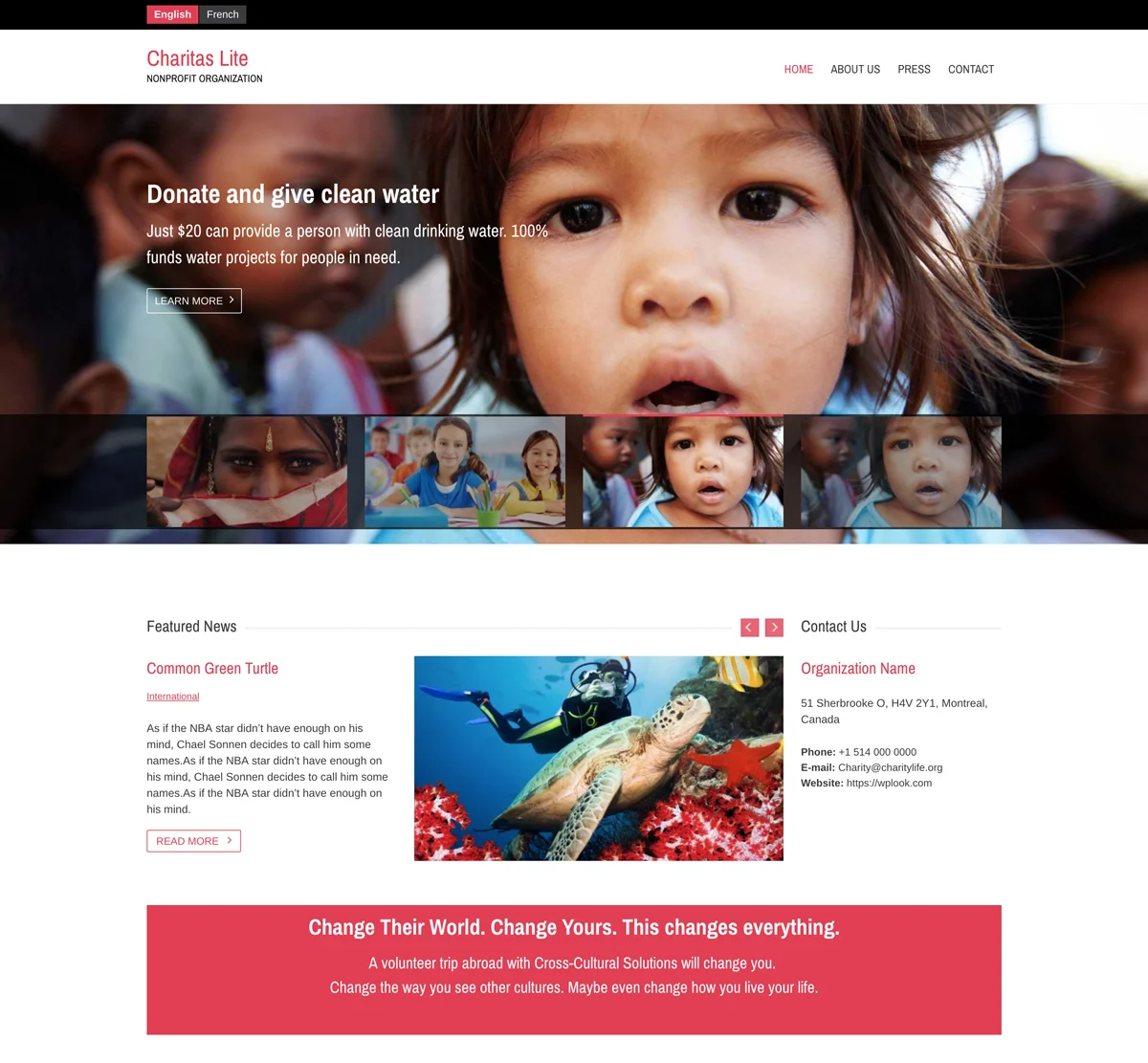
- Charity Life – Built for fundraising campaigns with progress tracking, team pages, and donation call-to-action sections on every page.
All three themes work with GiveWP, Charitable, and the other plugins covered in this guide. See our complete collection of free charity and nonprofit WordPress themes if you’re starting on a budget.
Need the full package? Our Nonprofit WordPress Themes Package includes all six nonprofit themes with lifetime updates and support.
Frequently Asked Questions
- How much does it cost to accept donations on WordPress?The software is free. GiveWP’s core plugin costs nothing. You pay payment processing fees of about 2.9% + $0.30 per transaction through Stripe or PayPal. On a $50 donation, that’s about $1.75. Premium add-ons for recurring donations or advanced features range from $100-300 per year, but the free version handles most nonprofits’ needs.
- Do I need to be a registered nonprofit to accept online donations?Anyone can accept donations through WordPress. However, only registered 501(c)(3) organizations can offer tax-deductible receipts in the United States. If you’re not yet registered, donations are still possible, but donors cannot claim them on their taxes. In Canada, you need registered charity status from the CRA.
- Can I accept donations without a plugin?Technically, yes. You can link directly to a PayPal.me page or embed a Stripe payment link. But a proper donation plugin gives you donor management, tax receipts, reporting, and a professional experience. For any serious fundraising, a plugin is worth the minimal setup effort.
- Which payment processor is better for nonprofits: Stripe or PayPal?Both charge similar fees (around 2.9% + $0.30). Stripe keeps donors on your website for a seamless experience and supports Apple Pay and Google Pay. PayPal redirects donors to their platform but benefits from widespread consumer trust. The best approach is offering both, so donors choose the option they’re most comfortable with.
Need Fast, Reliable WordPress Hosting?
Managed hosting with free SSL, daily backups and theme setup included.