Photo editing transforms good images into great ones. Whether you are preparing visuals for a WordPress website, social media, or print, the right photo editor app makes all the difference in how your work appears to your audience.
This guide covers the best photo editor apps across different platforms and budgets. From professional desktop software to powerful mobile apps, you will find options that match your skill level and editing needs. Each application has been tested and reviewed to help you choose the right tool for your creative workflow.
What to Look for in a Photo Editor App
Before choosing between photo editor apps, consider these essential features that separate good tools from great ones:
- Non-destructive editing: Make changes without permanently altering your original files
- Layer support: Combine multiple elements, effects, and adjustments independently
- RAW file support: Work with uncompressed camera files for maximum quality
- Color correction tools: Adjust exposure, white balance, and color grading accurately
- Retouching capabilities: Remove blemishes, unwanted objects, and distractions cleanly
- Export options: Save in various formats and quality levels for different purposes
Best Photo Editor Apps at a Glance
All ten photo editor apps below are tested, capable tools. Use this quick comparison to weigh our star rating against the ideal user for each, then read the full reviews for the detail that matters when you shortlist photo editor apps for your workflow.
| App | Rating | Best For |
|---|---|---|
| Affinity Photo | 4.5 / 5 | Pros wanting professional features with no subscription |
| Adobe Photoshop | 4.5 / 5 | The most comprehensive editing toolset |
| GIMP | 4 / 5 | Professional-level editing at zero cost |
| Adobe Lightroom | 4.5 / 5 | RAW workflows and large photo libraries |
| Pixelmator Pro | 4.5 / 5 | Mac users wanting a one-time fee |
| Capture One | 4 / 5 | Top RAW quality and color accuracy |
| Snapseed | 4 / 5 | Professional mobile editing, free |
| VSCO | 3.5 / 5 | Film-inspired social media aesthetics |
| Canva | 4 / 5 | Non-designers making social graphics |
| Photopea | 4 / 5 | Photoshop-style editing in the browser |
Affinity Photo
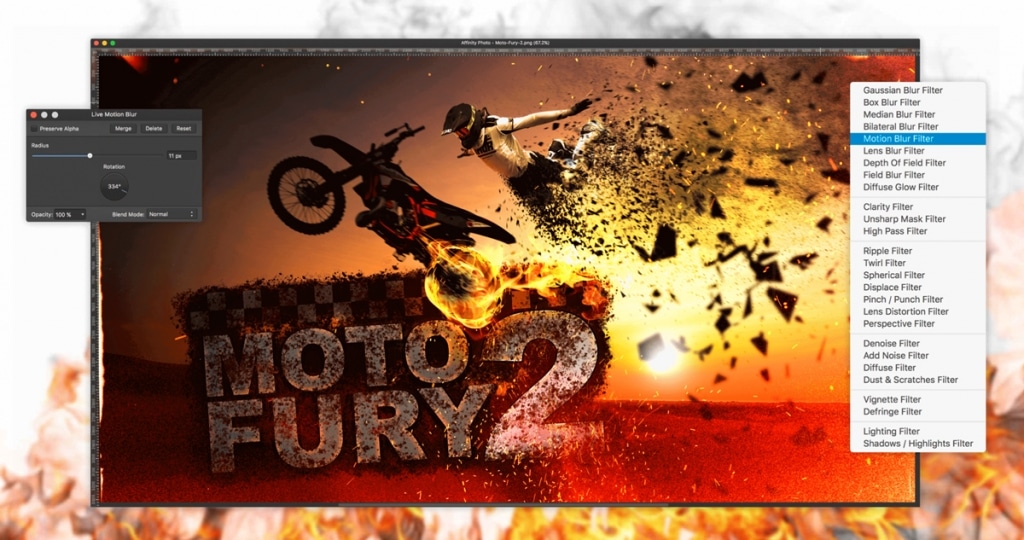
Affinity Photo, now part of the Canva family, delivers professional-grade photo editing without the recurring subscription costs. The universal license bundles Photo, Designer, and Publisher together, giving you a complete creative suite at a one-time price that pays for itself within months.
The application handles everything from basic retouching to advanced compositing with smooth performance on both desktop and iPad. Full PSD compatibility means you can collaborate with Photoshop users seamlessly, while features like 360-degree editing, HDR merge, and focus stacking put specialized tools within reach of every photographer.
Key Features
- Full PSD file compatibility for easy collaboration
- 360-degree and HDR image editing support
- Focus stacking and batch processing tools
- Professional RAW development workflow
- Real-time live filters with non-destructive edits
- Universal license covers desktop and iPad
Best For: Photographers and designers who want professional features without ongoing subscription costs.
Adobe Photoshop
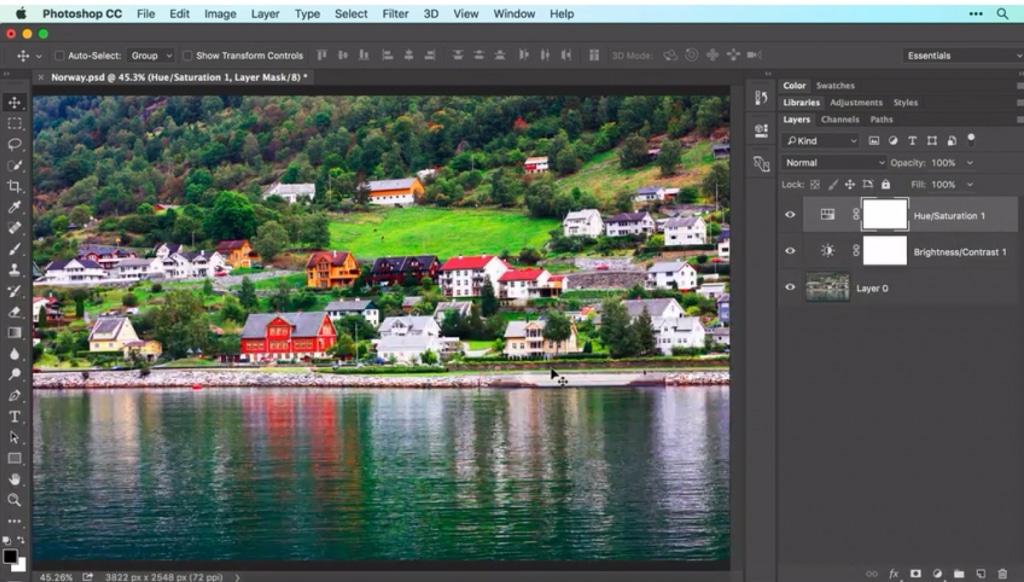
Adobe Photoshop remains the definitive standard for professional photo editing and digital art creation. Its comprehensive toolset spans everything from basic color correction to complex compositing, 3D modeling, and AI-powered generative features that push creative boundaries further each year.
The Photography plan pairs Photoshop with Lightroom at a reasonable price point, making the subscription more palatable for serious photographers. AI-driven tools like Content-Aware Fill, Neural Filters, and Generative Expand continue to automate tedious tasks while maintaining the precision control that professionals demand.
Key Features
- AI-powered selection and masking tools
- Content-aware fill for removing objects
- Neural filters for one-click enhancements
- Advanced layer and blending options
- Camera RAW integration built in
- Extensive plugin and extension ecosystem
Best For: Professional photographers, graphic designers, and anyone needing the most comprehensive editing toolset available.
GIMP
GIMP proves that powerful photo editing does not require a paid license. This open-source application has been refined over decades by a dedicated community, delivering a feature set that covers most professional editing needs across Windows, macOS, and Linux platforms.
The learning curve is steeper than commercial alternatives, and the interface takes getting used to if you are coming from Photoshop. But the trade-off is worth it for users who value software freedom, need a free solution, or prefer to customize their tools through scripts and plugins built by the community.
Key Features
- Advanced layer and mask support included
- Fully customizable interface and workflow
- Extensive plugin and script-fu support
- High-quality color management system
- Support for numerous file formats
- Active community with regular updates
Best For: Anyone wanting professional-level editing at zero cost, Linux users, and those who enjoy customizing their tools.
Adobe Lightroom
Adobe Lightroom excels where other editors fall short: managing and processing large photo libraries with speed and consistency. The non-destructive workflow means every edit is reversible, and the preset system lets you apply your signature look across hundreds of images in seconds.
Cloud sync keeps your entire library accessible from any device, making it easy to start editing on your desktop and finish on your phone. AI-powered masking and subject detection tools have dramatically reduced the time spent on selective adjustments, letting you focus on creative decisions rather than tedious selections.
Key Features
- AI-powered masking and subject detection
- Preset system for consistent batch editing
- Cloud sync across all your devices
- Powerful organization and smart tagging
- Batch editing for high-volume workflows
- Available on desktop, mobile, and web
Best For: Photographers who shoot in RAW and need to organize and process large image libraries efficiently.
Pixelmator Pro
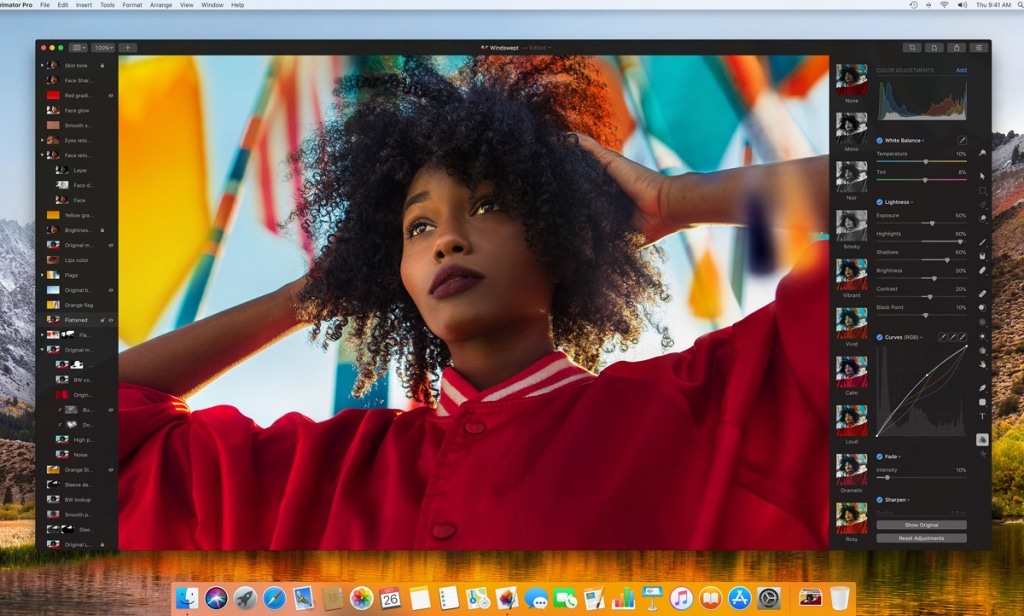
Pixelmator Pro combines powerful editing capabilities with the clean, intuitive design that Mac users expect. Built specifically for Apple hardware, it takes full advantage of Metal acceleration, Apple Silicon, and macOS features like Handoff and iCloud Drive to deliver a smooth editing experience.
Machine learning powers many of the standout features, from automatic color adjustments to intelligent object removal and background replacement. The one-time purchase price makes it an exceptional value compared to subscription-based alternatives, especially for Mac users who want professional results without ongoing costs.
Key Features
- ML-powered auto-enhance and repair tools
- Non-destructive color adjustments built in
- Full vector tools alongside raster editing
- Deep macOS integration with Handoff and iCloud
- Metal-accelerated performance on Apple chips
- PSD compatibility for Photoshop workflows
Best For: Mac users wanting a powerful, elegant photo editor that is optimized for Apple hardware and costs a one-time fee.
Capture One
Capture One has earned its reputation among professional and commercial photographers for delivering the finest color science and RAW processing available. The color grading tools go far beyond what Lightroom offers, with precision controls that let you sculpt tones exactly how you envision them.
Tethered shooting support makes it the go-to choice for studio photographers, allowing real-time review and adjustment during shoots. The session-based workflow keeps projects organized without forcing you into a single catalog structure, and every aspect of the interface can be customized to match your personal editing process.
Key Features
- Superior color grading and tone control
- Tethered shooting for studio workflows
- Advanced layer-based local adjustments
- Custom camera profiles for accurate color
- Session-based project organization
- Fully customizable keyboard shortcuts
Best For: Professional and commercial photographers who demand the highest quality RAW processing and color accuracy.
Snapseed
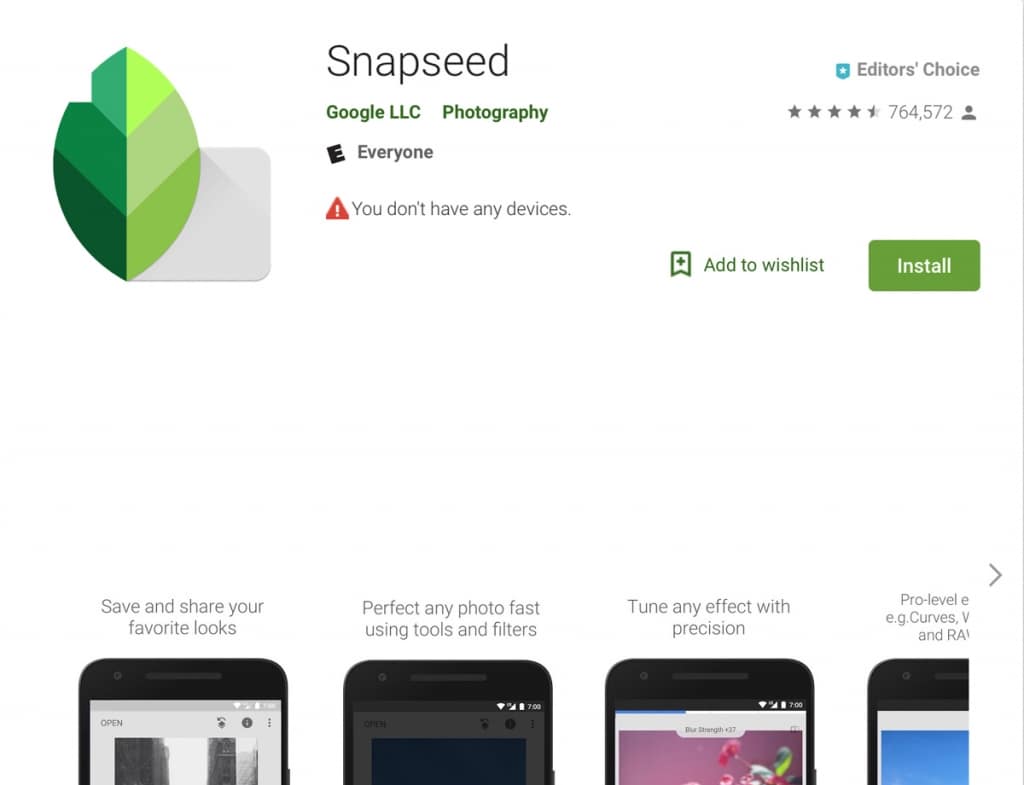
Google’s Snapseed brings desktop-caliber photo editing to your phone with a gesture-based interface that makes precise adjustments surprisingly intuitive. The selective editing tools let you target specific areas of your image with control points, applying different adjustments to different regions without complex masking.
Twenty-nine tools and filters cover everything from basic exposure correction to advanced techniques like curves, perspective correction, and double exposure. The healing brush removes unwanted objects cleanly, and the non-destructive editing stack means you can revisit and modify any adjustment at any time. All of this comes completely free.
Key Features
- 29 professional tools and creative filters
- Selective adjustments with control points
- Healing brush for removing distractions
- RAW file editing on mobile devices
- Face enhance and pose correction tools
- Custom preset Looks you can save and share
Best For: Mobile photographers who want professional editing capabilities without switching to a desktop computer.
VSCO
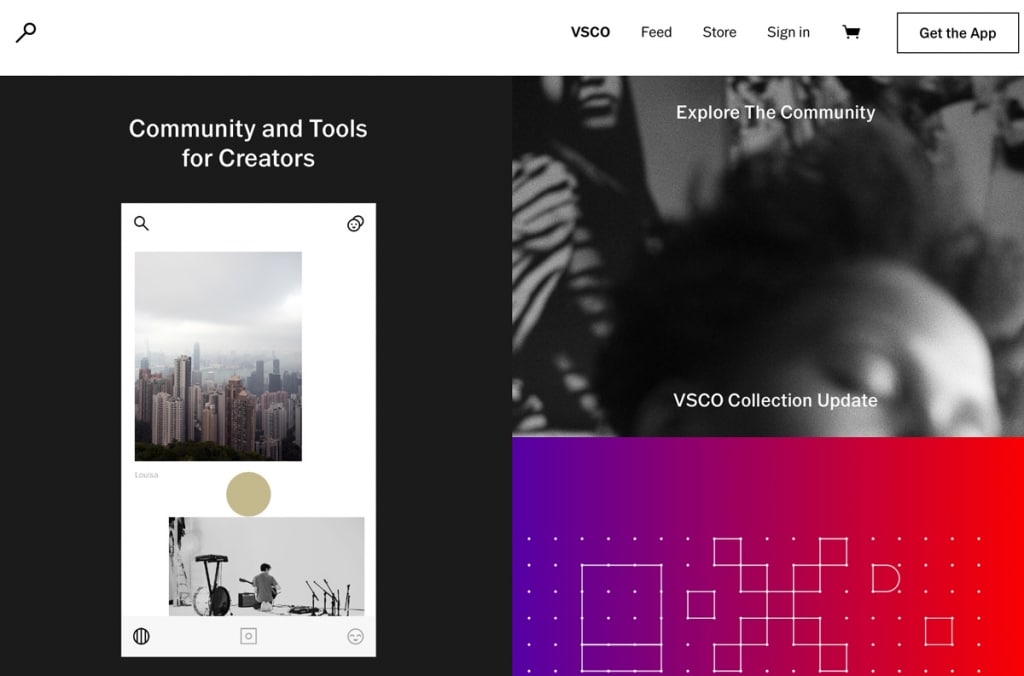
VSCO has shaped the visual aesthetic of modern mobile photography with its film-inspired presets that emulate classic analog stocks like Kodak Portra and Fuji Superia. The editing tools are capable without being overwhelming, striking a balance between creative control and ease of use that appeals to content creators.
The VSCO Pro subscription unlocks over 200 exclusive presets along with advanced editing tools, video editing, and the Montage collage creator. The built-in community provides inspiration without the engagement-driven pressure of mainstream social media, making it a refreshing creative space for visual storytelling.
Key Features
- 200+ film-inspired presets and filters
- Advanced editing and color grading tools
- Video editing capabilities included
- Creative community for inspiration
- Built-in camera with manual controls
- Montage collage creator for layouts
Best For: Content creators seeking consistent, film-inspired aesthetics for their social media and visual projects.
Canva

Canva has evolved from a simple template tool into a capable design and photo editing platform that serves millions of users worldwide. The photo editing features include one-click background removal, smart adjustments, filters, and effects that make professional-looking graphics accessible to anyone regardless of design experience.
The template library is where Canva truly shines for photo editing workflows. You can drop your edited photos directly into social media templates, presentations, or marketing materials without switching between applications. The Brand Kit feature ensures consistent styling across all your visuals, and direct publishing to social platforms streamlines the entire content creation process.
Key Features
- One-click background removal tool
- Photo filters and smart adjustments
- Text and element overlay system
- Thousands of customizable templates
- Brand kit for consistent visual identity
- Direct social media publishing built in
Best For: Non-designers creating social media graphics, presentations, and marketing materials that incorporate photo editing.
Photopea
Photopea replicates the Photoshop experience entirely within your web browser, with no installation, no account, and no subscription required. The interface will feel immediately familiar to anyone who has used Photoshop, and it handles PSD, XD, and Sketch files natively, making it a practical emergency editor when your main software is not available.
Despite running in a browser, Photopea supports layers, masks, blend modes, smart objects, and vector tools that cover most professional editing scenarios. It works on any operating system with a modern browser, including Chromebooks and Linux machines where Photoshop is not available. The free tier is fully functional with unobtrusive ads that a small monthly fee removes.
Key Features
- Photoshop-like interface in your browser
- PSD, XD, and Sketch file compatibility
- Layer styles and blending modes support
- Vector and raster editing tools combined
- No installation or account required
- Works offline after initial page load
Best For: Anyone needing Photoshop-style editing without installing software or paying for a subscription.
Photo Editing Best Practices
The best photo editor apps mean nothing without solid editing fundamentals. Apply these practices to improve your results regardless of which software you use:
Always edit non-destructively. Work with adjustment layers, smart objects, or virtual copies rather than directly modifying pixels. This preserves your original image and lets you revise edits later without starting over.
Correct white balance first. Color casts affect every other adjustment you make. Fix white balance before adjusting exposure or saturation to ensure accurate colors throughout your edit.
Use histograms to guide exposure. The histogram shows the distribution of tones in your image. Aim for data across the full range without clipping highlights or shadows unless you are creating a specific artistic effect.
Apply sharpening last. Sharpening amplifies existing detail but also noise. Complete all other adjustments before sharpening, and apply it at the appropriate amount for your output size and medium.
Develop a consistent editing style. Whether for personal branding or client work, maintaining consistent editing creates a recognizable look. Save presets for your common adjustments and adapt them to individual images rather than starting from scratch each time.
Choosing the Right Photo Editor
Choosing among photo editor apps depends on your specific needs:
For professional work: Adobe Photoshop or Affinity Photo provide the most comprehensive toolsets for complex projects.
For photography workflows: Adobe Lightroom or Capture One excel at organizing and batch-processing large image libraries.
For budget-conscious users: GIMP, Photopea, and Snapseed are free photo editor apps that deliver professional results at no cost.
For Mac users: Pixelmator Pro offers excellent value with native Apple hardware integration.
For mobile editing: Snapseed and VSCO provide desktop-quality tools on phones and tablets.
Many photographers use multiple photo editor apps together. Lightroom for organization and initial processing, Photoshop for detailed retouching, and Snapseed for quick mobile edits. The best approach is choosing photo editor apps that complement each other and fit naturally into your creative workflow.
Photo Editor Apps: Frequently Asked Questions
- What is the best free photo editor?Among free photo editor apps, GIMP offers the most comprehensive editing experience on desktop. For mobile, Snapseed provides professional-grade tools without any cost. Photopea works entirely in your browser and handles Photoshop files.
- Is Photoshop worth the subscription cost?For professionals who rely on advanced features daily, Photoshop’s subscription pays for itself in productivity. Hobbyists and occasional users often find better value in one-time-purchase photo editor apps like Affinity Photo or free options like GIMP.
- Can I edit RAW photos on my phone?Snapseed, Lightroom Mobile, and VSCO all support RAW editing on iOS and Android devices. This allows photographers to process camera files directly on their phones without transferring to a computer first.
- What photo editor do professional photographers use?Most professionals combine several photo editor apps: Adobe Lightroom for organizing and initial processing, plus Photoshop for detailed retouching and compositing. Some prefer Capture One for its superior color tools, particularly in commercial and fashion photography.
Related resources: For working with other media types, explore our guides on video editing software and audio editing tools. If you are building a visual portfolio, see our roundup of photography WordPress themes.
photo editor apps
Need Fast, Reliable WordPress Hosting?
Managed hosting with free SSL, daily backups and theme setup included.