


Forgot your WordPress login URL? This guide shows you how to find your WordPress admin login page. Learn the default URLs and how to bookmark them for easy access.
WordPress is the most popular content management system. It powers over 40% of all websites. After installing WordPress, you need to access the admin dashboard to manage your site. But many new users struggle to find the login page.
Default WordPress Login URLs
WordPress uses standard URLs for the login page. Try adding these to the end of your domain:
- /wp-admin/ – Redirects to login if not logged in
- /login/ – Direct link to login page
- /admin/ – Another shortcut to admin area
- /wp-login.php – Direct PHP file URL
For example, if your site is example.com, try:
- www.example.com/wp-admin/
- www.example.com/login/
- www.example.com/admin/
Any of these should take you to the WordPress login form where you enter your username and password.
Login with Subdirectory Installation
Sometimes WordPress is installed in a subfolder rather than the root directory. This happens when you want WordPress in a specific location like /blog/ or /wordpress/.
For subdirectory installations, add the folder name before the login URL:
- www.example.com/wordpress/wp-admin/
- www.example.com/wordpress/login/
- www.example.com/blog/wp-admin/
Replace “wordpress” or “blog” with your actual folder name.
Login with Subdomain Installation
WordPress might be on a subdomain like blog.example.com or shop.example.com. In this case, the login URL uses the subdomain:
- blog.example.com/wp-admin/
- blog.example.com/login/
- shop.example.com/wp-admin/
The format follows the same pattern, just with your subdomain as the base.
What Happens When You Visit wp-admin
When you go to /wp-admin/, WordPress checks your login status:
- Already logged in: You go directly to the dashboard
- Not logged in: You are redirected to the login page
- Session expired: You see the login form again
Once logged in, WordPress remembers you based on cookies. You stay logged in until you log out or the session expires.
How to Remember Your Login URL
You do not want to search for the login page every time. Here are ways to remember it easily.
Bookmark the Login Page
The simplest solution is bookmarking. Visit your login URL and add it to your browser bookmarks. Create a folder for your websites if you manage multiple sites.
In Chrome, press Ctrl+D (Cmd+D on Mac) to bookmark. In Firefox and Safari, use the same shortcuts or click the star icon.
Add Login Link to Your Menu
You can add a login link to your site navigation. Go to Appearance > Menus in WordPress. Click “Custom Links” and add your login URL with text like “Login” or “Admin.”
This helps team members find the login easily. Remove it if you do not want visitors to see the admin link.
Use the Meta Widget
WordPress includes a Meta widget that shows login and admin links. Go to Appearance > Widgets. Add the Meta widget to your sidebar.
The widget displays Log in, Log out, Entries RSS, Comments RSS, and WordPress.org links. It is a quick way to add login access without custom links.
Use Remember Me Option
On the login page, check the “Remember Me” box before logging in. This keeps you logged in longer so you visit your dashboard directly without the login form.

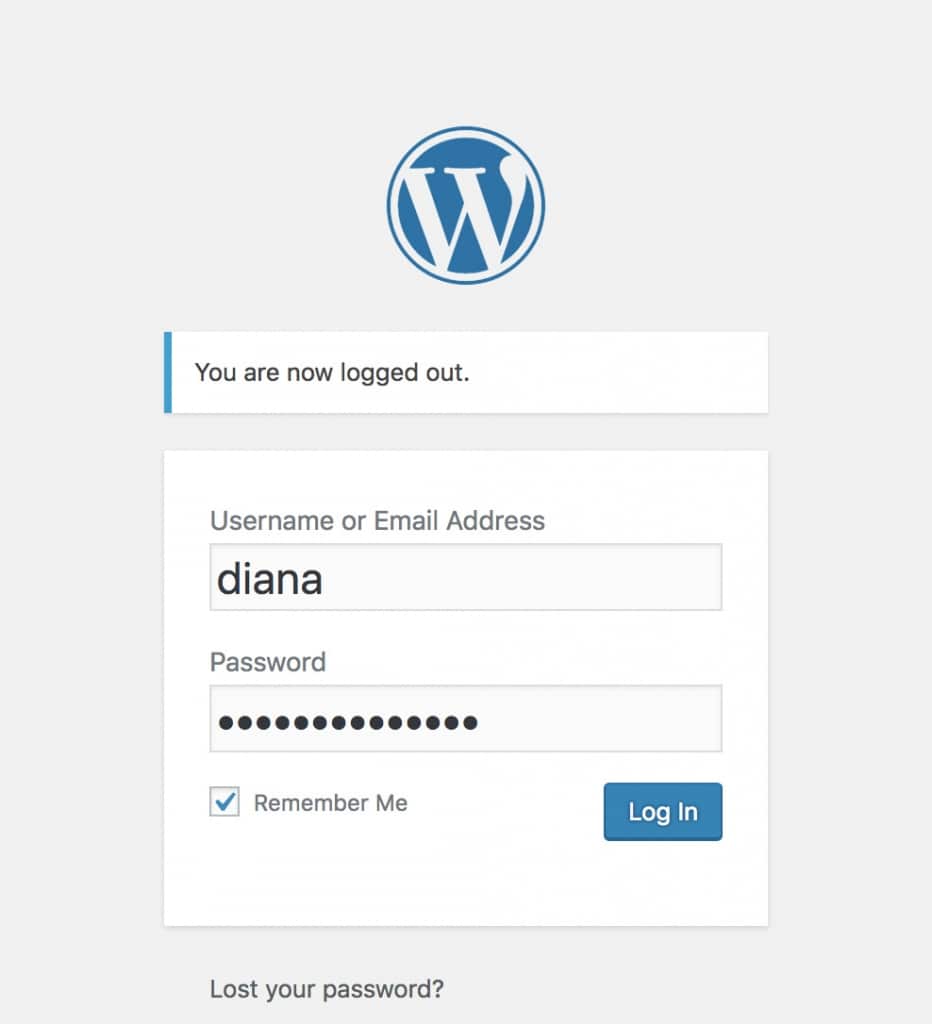
Note that “Remember Me” only works on your personal device. Do not use it on public or shared computers.
Forgot Your Password?
If you forgot your password, do not worry. Click “Lost your password?” on the login page. Enter your username or email address. WordPress sends a password reset link.
Check your spam folder if the email does not arrive. Some hosts block WordPress emails. Contact your hosting provider if password reset fails.
Alternatively, reset your password through phpMyAdmin in your hosting control panel. This requires database access and is more advanced.
Custom Login URLs
Some sites use custom login URLs for security. Plugins like WPS Hide Login change the default URL. If someone changed your login URL, you need to know the new one.
Check with your site administrator or developer. If you have FTP access, look in plugins to see if a login URL plugin is installed. You can deactivate it via FTP to restore default URLs.
Login Security Tips
Protect your WordPress login with these practices:
- Use strong passwords: Mix letters, numbers, and symbols. Avoid common words.
- Change default username: Do not use “admin” as your username.
- Limit login attempts: Security plugins can block repeated failed logins.
- Enable two-factor authentication: Add an extra security layer with 2FA.
- Keep WordPress updated: Updates fix security vulnerabilities.
Frequently Asked Questions
- What if none of the login URLs work?Check if WordPress is installed correctly. Contact your hosting provider for assistance. If you just installed WordPress, you might need to complete the installation first.
- Can I change the default login URL?Yes. Security plugins let you change wp-admin and wp-login.php to custom URLs. This adds a layer of protection against brute force attacks.
- Why does my login redirect to the homepage?This can happen due to cookie issues or misconfigured settings. Clear your browser cookies and try again. Check WordPress Settings > General for correct URLs.
- How do I log out of WordPress?Hover over your username in the admin bar at the top of the screen. Click “Log Out.” You can also visit /wp-login.php?action=logout directly.
Conclusion
Finding your WordPress admin login is simple. Use /wp-admin/, /login/, or /wp-login.php after your domain. Bookmark the URL for easy access in the future.
Once logged in, you have full control of your WordPress site. Create content, install themes, and manage settings from your dashboard.
For more WordPress basics, read our guide on how to make a website or learn about starting a blog.
Get Hosting